1. Arrival in the Granite City
It was early morning when the train rolled into Aberdeen Station, cutting through a thin veil of Scottish mist. The platform was quiet, the air briny and cool, hinting at the nearby North Sea. The city greeted me not with the bustle of tourist traps, but with the calm, dignified presence of centuries-old granite buildings and the subtle sound of gulls calling in the distance. I stepped onto the platform with a rucksack on my back and a camera slung over one shoulder, already anticipating the coastline that had drawn me to this northeastern corner of Scotland.
Aberdeen is known as the “Granite City,” and the architecture wears that name with pride. The first walk through the city center revealed silvery facades that seemed to shimmer under the pale sunlight. It’s a city that feels at once sturdy and eternal, its stone buildings weathered but unwavering. I headed straight toward the sea.
2. The Beach Esplanade
Aberdeen Beach lies just over a mile from Union Street, the city’s central artery. I took a leisurely walk down King Street, stopping briefly at a local café for a hot Americano and a buttery scone. The streets slowly opened up to a wide promenade, flanked by the North Sea on one side and rows of modest buildings and eateries on the other.
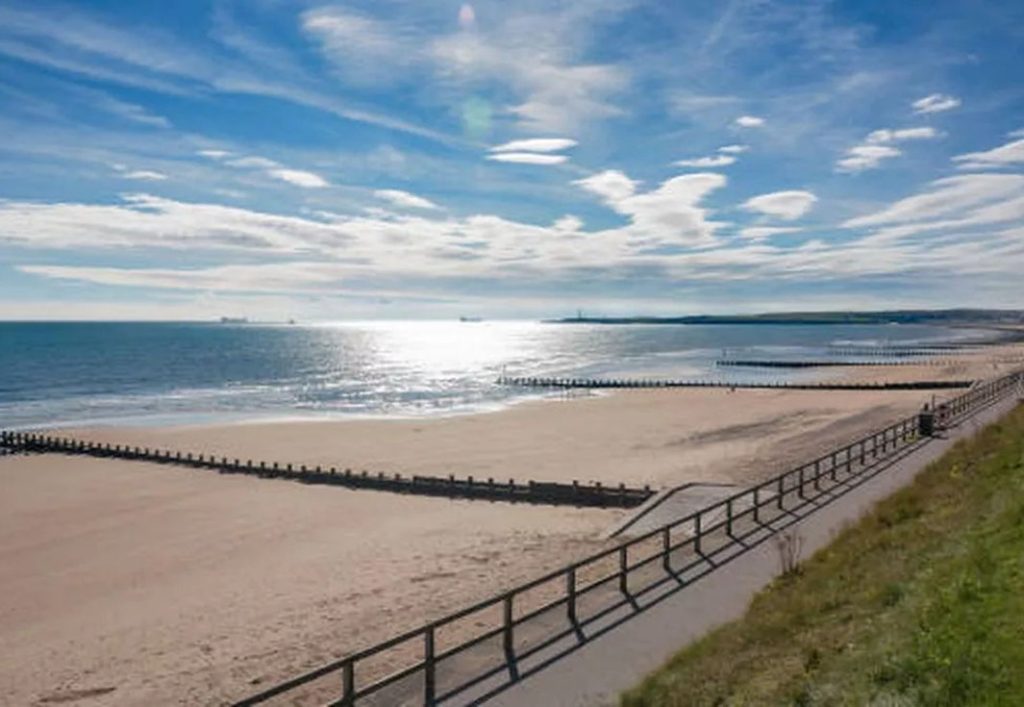
The beach itself stretched long and golden beneath a low, wind-swept sky. It wasn’t crowded. A few joggers moved along the esplanade, bundled in layers against the stiff breeze. Dog walkers wandered lazily while their companions darted across the sand. I kicked off my shoes and made for the shoreline. The sand here is surprisingly fine for a North Sea beach—soft and cool underfoot.
Waves rolled in steadily, not with the fury one might expect from such northern waters, but with rhythmic grace. I walked a good mile along the water’s edge, camera in hand, pausing now and again to photograph the horizon where sea and sky blurred together in a silvery wash.
3. Footdee (Fittie): A Hidden Fishing Village
At the southern end of the beach, just before the harbor, I turned off the esplanade and wandered into Footdee—pronounced “Fittie” by locals. This tucked-away hamlet feels entirely separate from the city around it. It’s a grid of small cottages and sheds, many decorated in an almost whimsical fashion—bright paint, nautical trinkets, and garden gnomes peeking out from corners.
Footdee has roots stretching back to the 19th century, when it was established as a planned fishing village. Today, it’s more of a living museum—though still inhabited, its spirit seems unchanged. I met a gentleman sweeping his stoop who nodded at me in that distinctively reserved but warm Scottish way. The houses here are tiny, arranged in tight squares, facing inward as if still huddled against Atlantic storms.
I sat for a while on a stone bench facing the harbor mouth, watching trawlers slide in and out of the channel. A group of seagulls had congregated on a nearby post, one of them squawking incessantly while the others watched, unimpressed. I couldn’t help but laugh.
4. Girdle Ness and the Lighthouse Walk
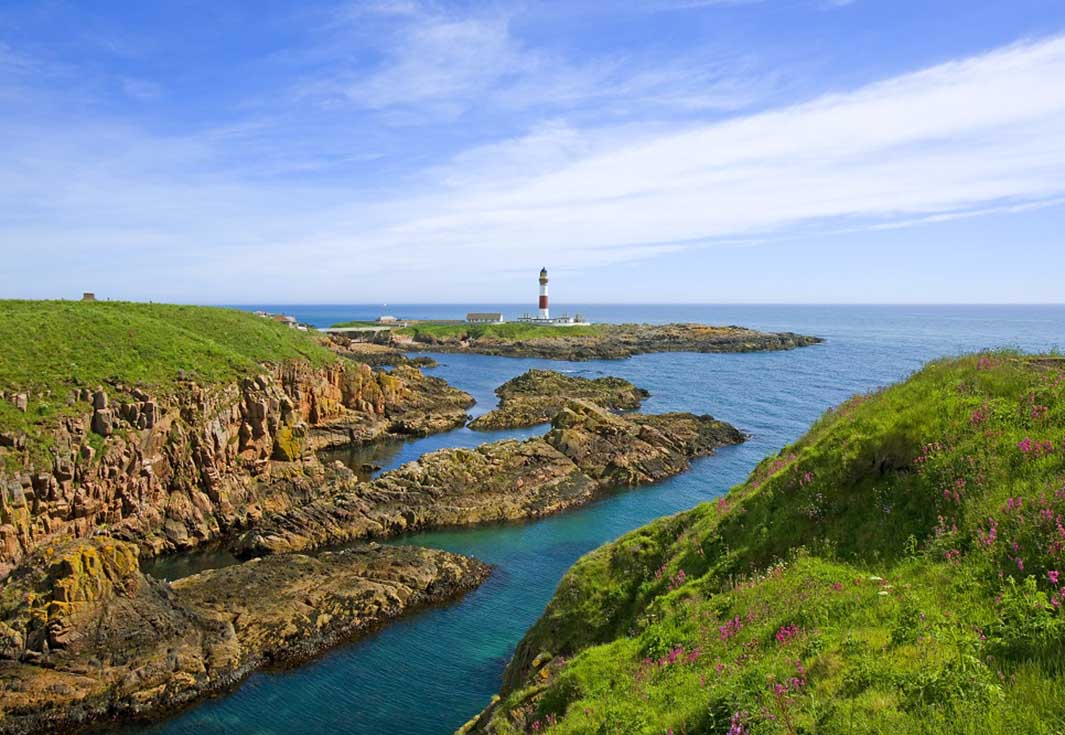
From Footdee, a narrow path follows the coast around the headland to Girdle Ness, home to one of Aberdeen’s most striking features: the Girdle Ness Lighthouse. The walk there hugs the edge of the sea, with steep grassy banks to one side and the endless churn of waves to the other.
The lighthouse itself is a tall white tower, 37 meters high, designed by Robert Stevenson—grandfather of writer Robert Louis Stevenson. Its stark silhouette against the grey sky makes it feel almost mythic. I arrived just as a freighter was moving past the headland, its hull towering above the waves like a steel cathedral.
There’s a certain kind of silence out here, punctuated only by the wind and the cries of seabirds. I found a spot beside the lighthouse and sat for some time, watching the horizon. The sea looked endless. A few seals bobbed up in the distance, their slick heads breaking the surface like living periscopes.
5. Watching the Seagulls
The gulls of Aberdeen are bold, intelligent, and entirely unapologetic. On the second day of the trip, I bought fish and chips from a stall near the beach. No sooner had I sat down to eat than I was ambushed—politely but firmly—by a large herring gull. He didn’t steal the food, but his intentions were unmistakable. I ended up sharing a few fries, more out of admiration than fear.
Later, I spent a long hour simply watching the gulls from the rocks near the pier. Their aerial acrobatics are surprisingly elegant. They catch wind currents with an ease that seems born of centuries. Some of the older locals believe these birds are smarter than we give them credit for. I’m inclined to agree. There’s an attitude about them, a kind of stubborn charisma.
6. Balmedie Beach: Dunes and Solitude
A few miles north of Aberdeen lies Balmedie Beach, accessible by bus or a short drive. I arrived mid-morning with a thermos of tea and no fixed schedule. The beach here is different—less urban, more wild. It stretches for miles, backed by rolling dunes tufted with marram grass. The wind here is stronger, and the sea feels more remote, more primal.
I followed the wooden boardwalk down through the dunes and onto the sand. There were fewer people here. A family played near the shore, their dog chasing waves with uncontainable joy. I found a sheltered spot in the dunes and sat down, letting the sound of the sea and the rush of the wind surround me.
The light shifted constantly. One moment the sky was bruised with clouds, the next it opened into a brilliant patch of blue. I poured some tea, wrapped my scarf tighter, and watched as the tide crept in.
7. Dolphins in the Harbor
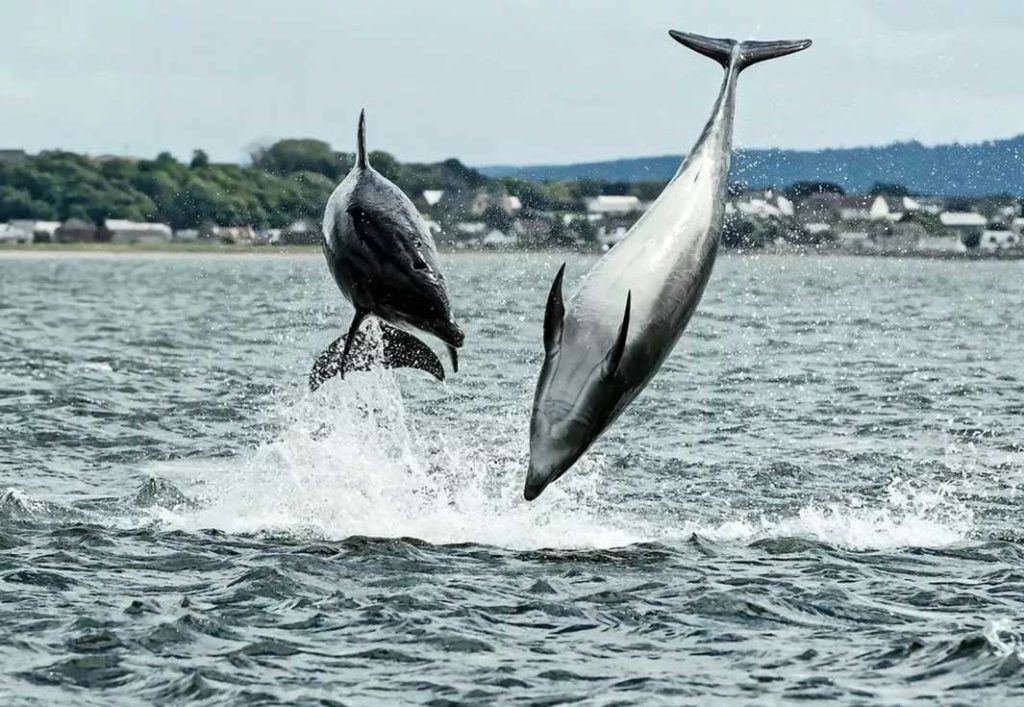
Aberdeen is one of the best places in Europe to spot bottlenose dolphins, and I was fortunate to witness this firsthand. On my third day, I took the morning to walk down to the Torry Battery, an old military fortification that now serves as a prime viewing platform.
It wasn’t long before I saw them. Sleek bodies arced out of the water in synchronized movement, like silver commas written on the sea. A small crowd had gathered—locals, mostly—and we watched in reverent silence as the pod played in the mouth of the harbor.
One woman, a retired marine biologist, mentioned that the Moray Firth dolphins often come this far south. She pointed out a particularly large male, which she called “Brutus,” claiming he had been swimming these waters for nearly 20 years.
8. Stonehaven and Dunnottar Castle
Though technically outside Aberdeen, a visit to Stonehaven and Dunnottar Castle felt like an essential part of the coastal experience. I caught an early morning train and reached the seaside town in under 30 minutes. The walk from the station to Dunnottar took about 45 minutes, following a coastal path that opened onto some of the most breathtaking views I’ve seen.
Dunnottar Castle rises dramatically from a cliff, its ruins perched above waves that crash furiously below. The sky was moody that day, which only added to the gothic feel of the place. I wandered the grounds for nearly two hours, tracing the crumbling stone walls and imagining the lives that once filled this fortress.
The wind was fierce atop the cliffs. I stood at the edge and looked down at the sea, dizzy with height and awe. A group of seagulls soared beneath me, their white bodies glowing against the dark water.
9. Sunset at the Promenade
Back in Aberdeen, my final evening was spent walking the length of the promenade one last time. The sky turned from pale grey to amber, casting a golden wash over the beach. The waves seemed to slow their rhythm, catching the light like shards of glass. Couples strolled hand in hand, and children ran laughing through the sand.
I bought an ice cream from a small van—vanilla with a flake—and sat on a low stone wall to eat it, feeling the chill in the air begin to deepen. The horizon flared briefly with orange and then softened to violet. Gulls wheeled overhead, their cries sounding like echoes from some other century.
The wind picked up as the light faded, and I pulled my coat tighter. The sea, the sky, the sand—all of it lingered in my mind like a dream half-remembered. There was no need to say goodbye. The coast of Aberdeen isn’t the kind of place one leaves behind. It stays with you. It settles in.